
The character plays an important role in shaping the design of how stories are considered and remembered. Whether in sports, animation, or broad brand narratives, well-designed characters can catch the viewer’s attention more effectively than a plot twist or action sequence. With visual content more saturated than ever in 2025, everything from a character’s silhouette to their colour palette and fine details affects how they’re recognised and remembered.
These visual choices aren’t just about aesthetics. They mirror broader shifts in technology, culture, and audience expectations. From the growing use of AI in concept development to the renewed appreciation for handmade details, today’s character design trends reveal what creators value and what audiences respond to. Studios exploring current character design services are doing so with an eye on these evolving creative priorities.
1. Stylized Realism
Stylized realism is quickly becoming the gold standard in modern character design. It strikes a careful balance between two extremes: the emotional clarity of exaggerated styles and the immersive believability of realism. Characters designed in this way have proportions, clothing, and textures grounded in reality, but they’re not slaves to it. Instead, artists push certain features – eyes, expressions, silhouettes – just far enough to maintain artistic flair and audience appeal.

This approach works especially well in narrative-driven games and animated series, where storytelling depth is a priority. It allows for subtle emotion and detailed costume design without the coldness or uncanny valley of photo-realistic models. Studios that use stylized realism gain flexibility: they can appeal to both fans of realism and fans of more fantastical aesthetics, making their characters accessible, iconic, and emotionally rich.
2. AI-Co-Created Designs
Artificial Intelligence is a real tool shaping how characters are imagined. In 2025, studios aren’t handing creative control to AI, but they are using it as a powerful co-creator. Concept artists can now generate dozens of rough character ideas in minutes using text prompts or visual inputs. These AI-generated drafts aren’t final – they’re raw inspiration. The real value comes when artists refine, remix, and evolve these outputs into unique, intentional designs.

This workflow lets teams experiment faster, explore wider stylistic ground, and reduce early-stage production costs. It also makes it easier to communicate ideas with clients or stakeholders by showing multiple directions quickly. The key is balance: AI handles volume and iteration, while human designers guide emotion, storytelling, and style. Studios that adopt AI as a collaborative tool, not a shortcut, are setting themselves up for faster turnarounds and fresher visual concepts.
3. Pixel Aesthetic 2.0
Pixel art has always been a fan favourite – its retro charm and simplicity strike a nostalgic chord. But in 2025, it’s being reimagined in more artistic ways. Pixel aesthetic 2.0 goes beyond chunky sprites and flat animations. Artists now mix traditional pixel techniques with advanced shading, lighting effects, and layered animations, creating visually rich and emotionally expressive characters within pixel constraints.

This evolved pixel style still carries that classic ‘8-bit’ vibe but feels fresh and modern. It’s especially popular in indie games and mobile titles, where visual identity is key and budget or hardware limitations push for more creative solutions. What makes this style stand out now is how artists are treating it less as a limitation and more as a deliberate look, one that can feel just as handcrafted and cinematic as high-fidelity 3D art when done well.
4. Low-Poly Expressionism
These days, low-poly is a statement. In 2025, more artists are embracing the low-polygon style not for technical necessity, but for its expressive potential. With simplified geometry and flat texture, low-poly letters highlight the shape, movement and silhouette. This minimalism invites the viewer to fill the spaces, leading to a subtle emotional depth to the art that can sometimes decrease in the hyper-deified model.

Studios are also finding low-poly design advantageous in production. It allows rapid modelling, easy adaptation in platforms (especially for mobile and VR), and a more specific visual identification. The style is often aligned with horror games, practiced stories, and indifferent titles, but it isn’t limited to them. In the right hands, the low-papers become a bold aesthetic option-one that balances creativity with clarity and provides a stunningly rich experience through simple forms.
5. Bold Minimalism in Silhouette Design
In the world filled with visual noise, the silhouette is king. In 2025, the character designers are working hard in bold minimalism – using clean, strong shapes to create immediate recognisable profiles. Whether it is a pointed shoulder pad, oversized helmet, or exaggerated organ ratio, the target is simple: make the character in a moment, even from a distance, even in Grassscale.

This trend is not only about simplicity – it is about being memorable. Viewers often recall the size of a character before any description, and a unique silhouette can become a powerful branding tool. This is especially important in sports with the book action or disorganised scenes, where visual clarity affects the gameplay. For studios, in the design process, quickly investing in bold silhouette work pays across the board: marketing, gameplay, and storytelling all.
6. Maximalist Detail in Fantasy Design
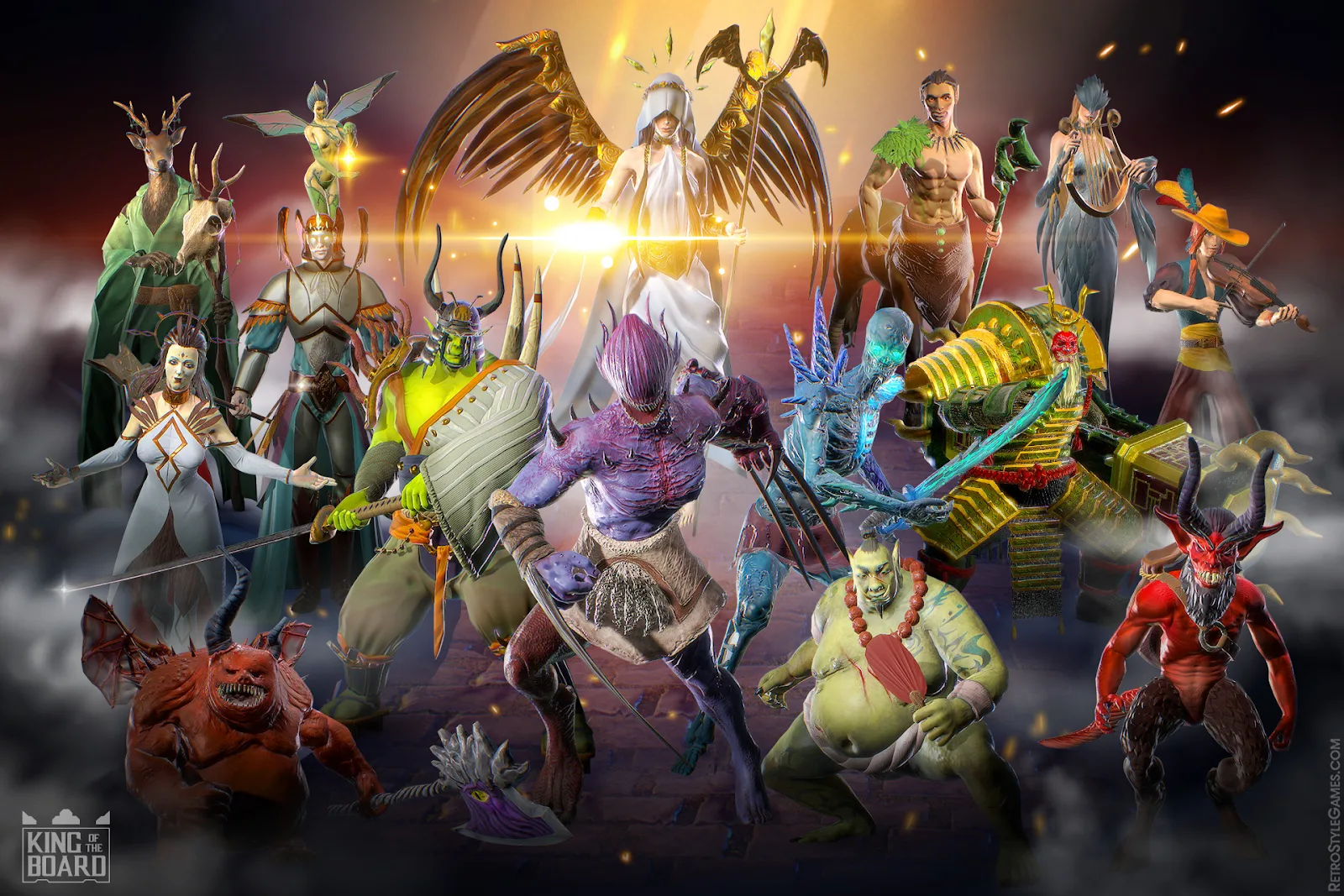
While minimalism rules some corners of the design world, fantasy character art in 2025 is diving headfirst into maximalism. Designers are packing in layered fabrics, elaborate weaponry, intricate jewellery, and hand-painted textures. Every detail tells a piece of the story – whether it’s a character’s culture, rank, battle history, or magical background. Nothing is random. Everything, from the stitching on a cloak to the glyphs etched into a sword, serves a narrative function.

This style thrives in worlds where immersion is everything – RPGs, high-concept films, and lore-heavy games. Players expect to pause, zoom in, and read the character visually. But maximalist detail is about intention. The trend in 2025 is to make every ornate decision purposeful, blending visual richness with strong worldbuilding. When done right, these characters feel like artifacts pulled straight from another world.
7. Cultural Fusion Aesthetics
In 2025, character design is no longer bound by regional influences – it thrives on fusion. Designers are blending visual languages from different cultures to create characters that feel both new and emotionally resonant. You might see a warrior with a kimono-inspired exosuit, or a shaman whose attire mixes Arctic textures with West African beadwork. These mashups are curated, thoughtful, and deeply intentional.

This trend reflects a broader shift toward global storytelling. Audiences are more diverse, and they’re craving characters who don’t fit neatly into one cultural box. For studios, this is both a creative opportunity and a responsibility. Done well, cultural fusion adds richness and complexity. Done carelessly, it risks appropriation. In 2025, successful studios are the ones doing their homework – collaborating with cultural consultants, hiring diverse artists, and designing from a place of respect as well as innovation.
8. Meta-Human Blends
As the technology strains the lines between real and digital, the concept of “meta-human” is redefining character design. In 2025, many studios are combining photorealistic scans of real actors or models with hand-designed enhancements – Twixes for untreated, surface texture, or facial characteristics that add flair without breaking realism. Results: the letters that feel humanely human, but still stylish enough to avoid unnatural valleys.

These blends are especially popular in cinematic cutscenes, virtual influencers, and metaverse avatars. They offer a way to ground stories in reality while still maintaining creative control. Instead of striving for pure realism or pure fiction, designers are creating hyper-believable hybrids – humans who look like they belong both in the real world and just beyond it. For studios, this approach gives the best of both worlds: the emotive power of realism with the flexibility of imagination.
9. Textured Grain & Imperfection
Perfect characters are out. In 2025, audiences crave realism, not in terms of high-fidelity graphics, but in flaws. Designers are leaning into rough textures, visible brush strokes, asymmetry, and minor “mistakes” that make characters feel more authentic. A sticking blade, a terrible sleeve, unequal facial features – these small flaws breathe life into design and suggest a history behind every model.

This beauty push is also a reaction to the rise of AI-borne materials, which can often feel very polished and very sterile. Grain, patience, and human irregularity are becoming a quiet rebellion – a way for designers is a way to say: “It was made by hand”. For studios, embracing imperfection helps the characters feel grounded and reliable, especially in fiction or emotionally complex projects. It also creates texture variety and visual interest, making characters more engaging to look at and remember.
10. Handcrafted & Analog-Influenced Looks
Pendulum is back in touch. In 2025, many studios are taking inspiration from analog techniques – pencil sketches, ink lines, paper textures, and brushwork are finding their way back in digital character design. This handcrafted aesthetics gives a warmth and charm to the characters that contrasts with the very high dominance of the previous decade, digital perfection.

Hand-made elements do not just look good – they feel personal. They carry the artist’s fingerprint, which makes the characters more intimate and expressive. This trend is particularly prominent in indie Games, narrative mobile apps, and style animation projects, where visual storytelling is central. For studios, it is a reminder that even at a technical-sustained age, human touch still matters. Whether it is a subtle line variation or a coat of rough color, these flaws form connections and character.
Final Thoughts
In 2025, how character design stories are told and experienced reflects deep changes in this. Visual options are not only about style – they are about the meaning. Whether a character is made of pixel or photogrammatory, whether they are stained or flicker with metal, their design speaks about the world that they reside in and they were to provoke emotions.
The most resonant characters of this year are those who balance the craft with clarity. Some do it through bold silhouettes, others through maximalist detail or cultural nuance. What connects them is intention. These are not just cool designs – they are ships for narrative, mood, and identity. For studios and creatives, being informed on these trends means being better equipped to shape the stories that are both visually hypnotic and emotionally grounded.