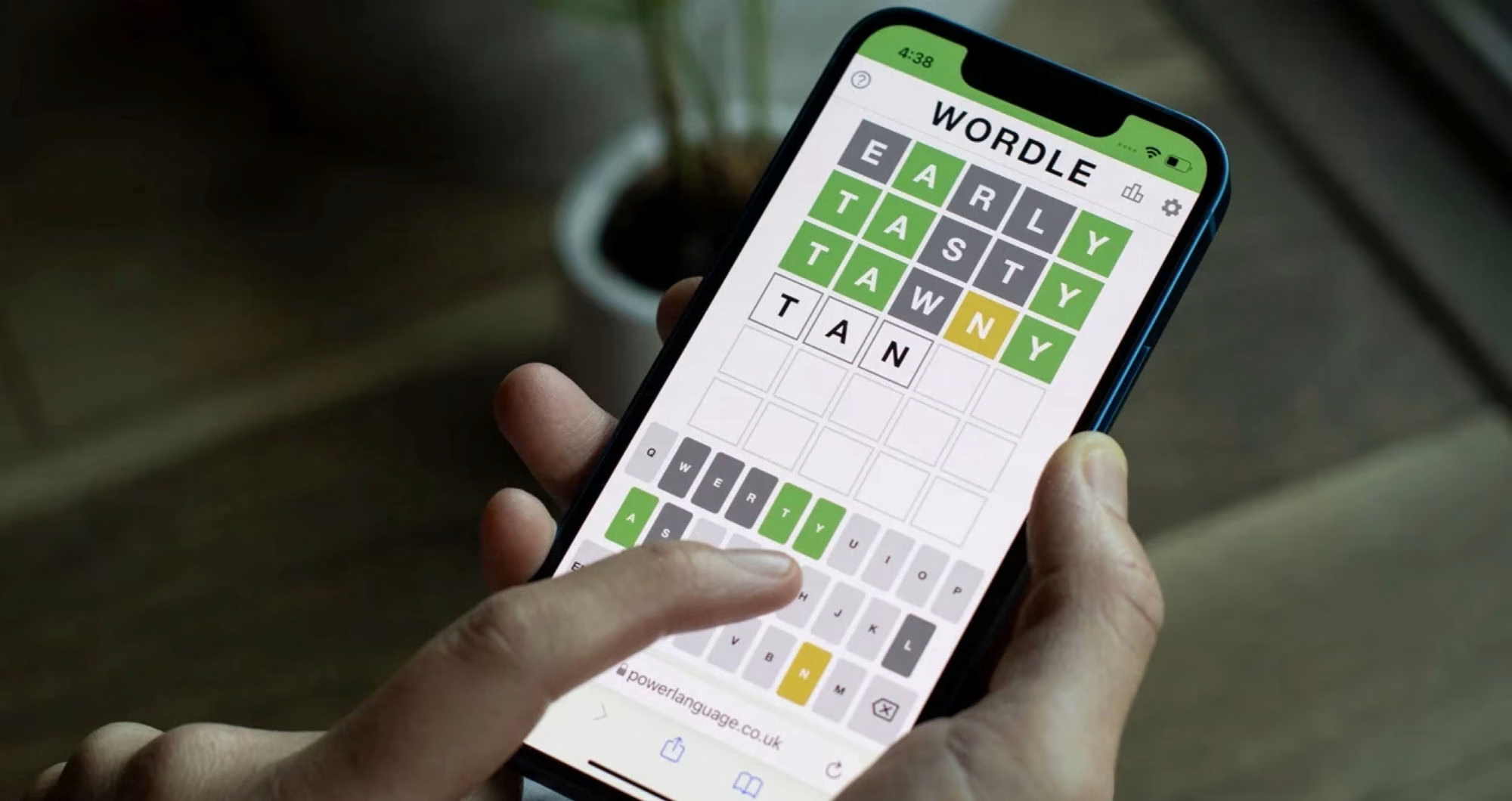

The internet is full of simple yet addictive tools that capture people’s attention and spread like wildfire. Some are playful tests that claim to measure how attractive you are, while others challenge your brain with puzzles and logic games. Two examples that stand out in recent years are Test de Belleza, a beauty rating website, and the Wordle Italiano, a daily word puzzle that became a cultural phenomenon. At first glance, they might seem worlds apart — one focuses on physical appearance, the other on wordplay. Yet both show how much people love interactive online experiences that mix curiosity, fun, and social sharing.
What is Pretty Scale?
Pretty Scale is an online tool that claims to “rate” your beauty based on facial features. It became popular because of its simplicity: upload a photo, let the algorithm analyse your face, and get a percentage score that supposedly reflects how attractive you are. The idea isn’t new — people have long been fascinated with facial symmetry and beauty ratios — but Pretty Scale turned it into a quick, shareable online experience.
The process is straightforward. Once you upload a selfie, the tool asks you to align markers with specific facial points like the eyes, nose, lips, and chin. It then compares these measurements against the so-called “golden ratio” of beauty. In seconds, you receive a score along with comments such as “Your face is too wide” or “Good face shape.” The results are often entertaining, sometimes surprising, and almost always provoke curiosity.
Why People Use Pretty Scale
The popularity of Pretty Scale lies in its mix of fun and validation. People are naturally curious about how others perceive them, and the idea of an “objective” rating from a computer feels intriguing. Many users don’t take it too seriously; they see it as a playful way to pass time or spark conversations. Social media amplified its reach as people began posting their results on TikTok, Instagram, and YouTube. Friends compared scores, influencers reacted to their ratings, and challenges spread across platforms.
In many ways, Pretty Scale works like a modern “internet quiz.” Just as people once shared results from personality tests or BuzzFeed quizzes, today they upload selfies to see what number an algorithm assigns to their looks.
Criticism and Limitations of the Pretty Scale
Of course, Pretty Scale comes with criticism. Beauty is subjective, influenced by culture, personal preference, and trends. Reducing it to a single number can feel shallow or misleading. Experts warn that the tool has no scientific accuracy and should not be treated as a serious measure of attractiveness.
Another concern is self-esteem. For some users, especially teenagers, receiving a low score might reinforce insecurities. Algorithms can also carry bias, often favouring Western facial features while overlooking global diversity. That’s why it’s important to remember that Pretty Scale is best viewed as entertainment, not truth. Beauty extends far beyond symmetry and ratios, and no app can define it fully.
What is Wordle Page?
On the other side of the spectrum is Wordle, a word puzzle game that took the internet by storm in late 2021 and early 2022. Created by software engineer Josh Wardle, it began as a personal project for his partner, who loved word games. Soon, it spread beyond friends and family, becoming a viral hit that attracted millions of daily players. The Wordle page refers to the online version where people log in each day to solve a new puzzle.
The rules are simple: guess a five-letter word in six tries. After each guess, the game gives feedback using colored tiles. Green means the letter is in the correct spot, yellow means the letter is in the word but in the wrong place, and grey means the letter isn’t in the word at all. The challenge resets every 24 hours, giving players a fresh puzzle to solve each day.
Why Wordle Became a Global Trend
Wordle’s rise can be explained by three things: simplicity, community, and habit. The game is easy to understand and takes only a few minutes to play, making it perfect for busy lives. Its once-a-day format turned it into a ritual — something to look forward to with your morning coffee or before bed.
The community aspect made it even more powerful. Players began sharing their results using a grid of colored squares that mimicked the game’s feedback. These emoji-like patterns spread across Twitter and WhatsApp groups, sparking curiosity and inviting others to play. Soon, Wordle grids were everywhere, turning the game into a shared cultural experience.
Benefits of Playing Wordle
Beyond fun, Wordle offers real benefits. It improves vocabulary by exposing players to new five-letter words. It sharpens memory and logic as players try to eliminate possibilities and test strategies. Psychologists even note that games like Wordle can reduce stress by providing a short mental challenge that feels rewarding when solved.
Unlike Pretty Scale, Wordle is not about appearance but about problem-solving. Success doesn’t depend on how you look but on how you think, making it more universally empowering.
Pretty Scale vs Wordle: Two Sides of Online Fun
Pretty Scale and Wordle represent two very different kinds of online interaction: one taps into curiosity about looks, the other into love of language and puzzles. Yet they share some important similarities. Both are simple to use, spread quickly on social media, and encourage people to share results with friends. Both highlight the way digital tools can create communities around even the smallest activities.
While Pretty Scale thrives on visual validation, Wordle thrives on intellectual satisfaction. Together, they show the diversity of what entertains people online — whether it’s rating a face or guessing a word.
Why These Tools Matter in Internet Culture
The success of both Pretty Scale and Wordle shows how much people crave interaction, validation, and play. Humans are naturally curious: “Am I attractive?” and “Can I solve this puzzle?” are questions that appeal to universal desires for feedback and achievement.
In a digital world filled with serious news and constant demands, tools like these provide a break — a quick hit of fun that can be shared with others. They also highlight how trends spread: a few social media shares can turn a small website or game into a global phenomenon.
Healthy Use of Pretty Scale and Wordle
While both tools are entertaining, it’s important to use them wisely. Pretty Scale should be seen as playful, not as a measure of worth. Beauty is diverse, and no algorithm can define it. Wordle, while harmless, can sometimes become frustrating if players feel pressured to keep a streak. Like any game, balance is key.
The healthiest approach is to treat these tools as small joys. Use Pretty Scale for a laugh with friends, not as serious feedback. Play Wordle as a daily brain teaser, but don’t stress if you miss a puzzle. At their best, both tools are meant to add lighthearted moments to our routines.
Conclusion
Pretty Scale and Wordle may be very different, but they share an important role in today’s internet culture. Both are simple, accessible, and endlessly shareable, which explains why they captured so much attention. Pretty Scale taps into the curiosity of how we look, while Wordle challenges the mind with words and logic.
Together, they represent two sides of online fun — one playful and visual, the other intellectual and strategic. They remind us that people seek not only information online but also entertainment, connection, and a chance to express themselves.
At the end of the day, whether you’re laughing at a Pretty Scale score or celebrating a Wordle win, these tools highlight the lighter side of digital life. They show that sometimes the simplest ideas — a face rating or a five-letter word — can bring millions of people together.