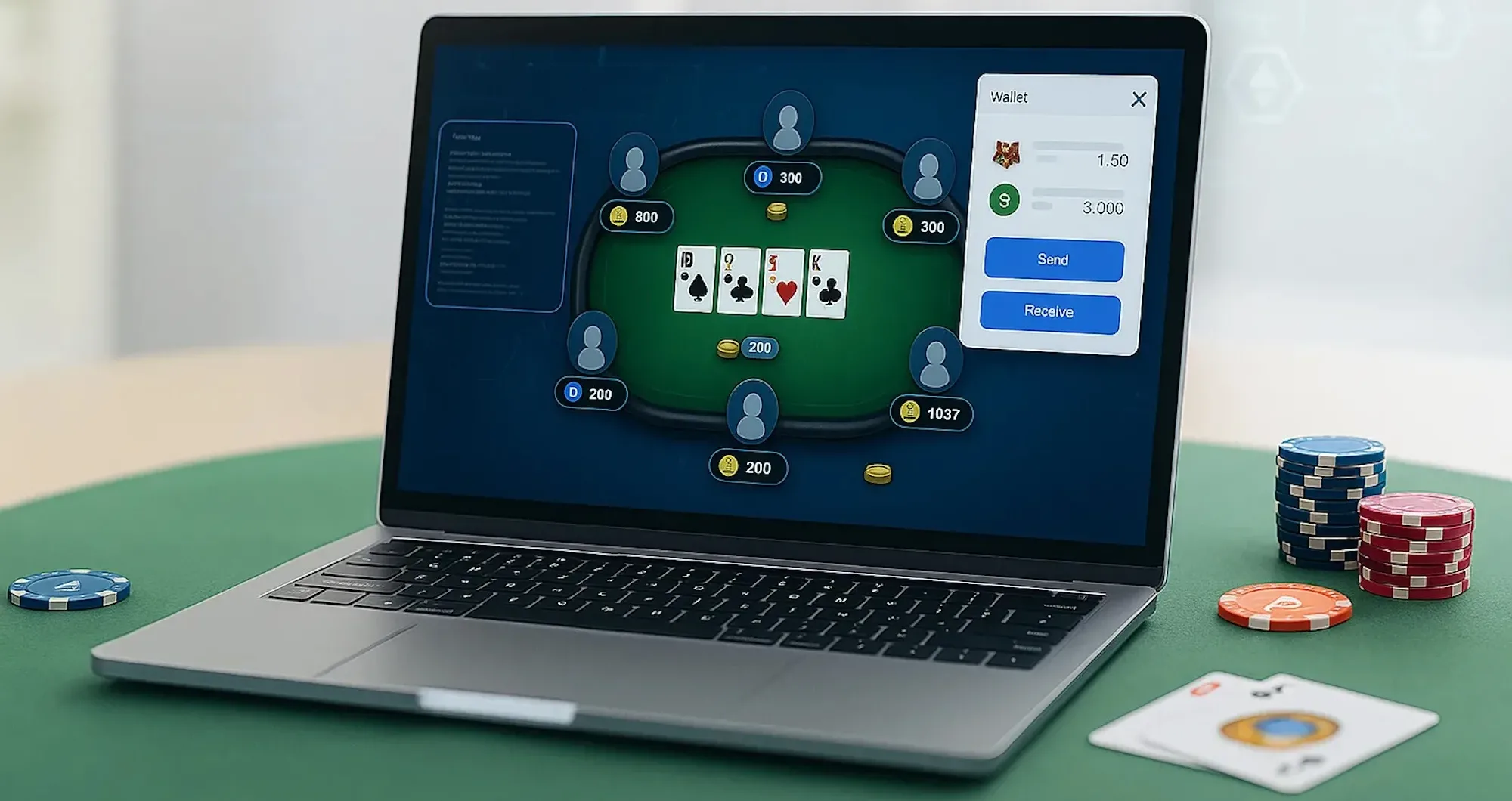

Online poker is evolving. What was once run on centralised platforms is now shifting toward blockchain poker platforms that offer greater transparency, faster payouts, and stronger fairness guarantees. These new systems, driven by crypto poker sites and decentralised technologies, are redefining how the game is played and managed. What’s emerging isn’t a fad, it’s a fix.
The Trust Problem with Traditional Online Poker
Online poker platforms have long operated as black boxes. Players had little visibility into how the random number generators worked, whether cards were shuffled fairly, or if their funds were truly secure. Centralised operators controlled everything: the software, the servers, and the wallets. It created a system based on trust, with few ways to verify. This is where blockchain poker platforms step in.
By using blockchain gaming architecture, these platforms move core functions to public, verifiable code. Players no longer have to take a site’s word for it. They can check outcomes, transactions, and contracts themselves. It’s not trust, it’s math.
What Makes Blockchain Poker Different
In decentralised poker systems, every action is logged on a distributed ledger. That means the deck shuffle, the hand result, and the payout are recorded immutably. Players can independently verify fairness through on-chain data. A major innovation is the use of smart contracts in poker gameplay. These contracts automatically execute outcomes based on predefined rules, without interference from operators. Once the contract is deployed, no one can alter it mid-game. That removes human error and bad actors from the equation.
Another key advantage? Instant payouts through crypto payments. Instead of waiting hours or days for withdrawals, players receive their winnings directly into their crypto wallets in seconds. No delays. No middlemen. And with support for popular cryptocurrencies like USDT, ETH, and even Bitcoin, these poker platforms with cryptocurrency bypass traditional financial systems altogether.
A Look at the Playing Experience
Joining a decentralised poker game usually starts with connecting a Web3 wallet like MetaMask. There’s no registration, no email verification, and no need to deposit funds into a custodial account. The funds stay in the player’s wallet until used in a smart contract for gameplay. The poker table itself is governed by a set of immutable rules coded into the contract. Players interact directly with the smart contract to place bets, receive cards, and collect winnings. This level of automation and openness is new to the poker world, and it’s reshaping expectations.
It also brings one of the most important benefits of blockchain poker platforms: provably fair gaming. Using cryptographic randomness, players can confirm that the outcomes are not manipulated. The math checks out every time.
Decentralisation vs. the Old Way
In contrast to traditional poker platforms, blockchain-powered poker offers decentralised governance. There’s no need for a central authority to oversee hands, enforce rules, or manage payments. Everything is handled by code. This eliminates the single point of failure. If a traditional site goes down or freezes funds, players have little recourse. On blockchain poker platforms, the infrastructure is distributed and resilient.
The shift to decentralised poker also introduces a new layer of player control. In many cases, these platforms evolve into DAOs, Decentralised Autonomous Organizations, where users vote on updates, rule changes, and fee structures. It’s poker, but not as we’ve known it.
Platforms Fuelling the Movement
Some of the early leaders in this space are building reputations for innovation. Virtue Poker, for instance, was built on Ethereum and uses peer-to-peer smart contract gameplay. CoinPoker, a crypto-native site, has operated for years with blockchain-based fairness and crypto wallet integration.
Behind the scenes, the shift toward blockchain-powered gameplay has created a need for adaptable technical frameworks. Industry contributors have started documenting and deploying backend systems capable of supporting decentralised poker logic, smart contract execution, and wallet-based interaction models. Resources like this overview on poker game development architecture outline how these systems can be structured for transparency, scalability, and modular upgrades in blockchain gaming environments.
New entrants like ZedRun Poker DAO are experimenting with full decentralisation, offering a glimpse of where Web3 poker might be headed. Each of these platforms focuses on blockchain gaming principles: open-source logic, decentralised infrastructure, and community-driven decision-making. Their goal is not to replicate traditional poker; it’s to improve it fundamentally.
Security and Legal Considerations
The shift to crypto poker doesn’t eliminate all risk. Smart contracts can be buggy or exploited. Users who lose wallet keys lose access to their funds. And the absence of traditional KYC processes raises regulatory questions in several regions.
Still, many crypto poker sites operate legally under licenses from crypto-friendly jurisdictions like Curaçao, Antigua, or parts of Europe. These licenses often recognise the differences between centralised gambling operations and blockchain-powered gaming platforms. As the legal landscape adapts, developers are increasingly focused on trustworthiness, building secure, auditable, and user-responsible ecosystems.
Why Players Are Moving to Blockchain Poker
A growing number of poker players, especially in the DeFi and crypto communities, prefer blockchain poker platforms for three core reasons: control, fairness, and speed. These players value the self-custody model, where their funds remain in their wallets at all times. They appreciate the lack of arbitrary freezes, restrictions, or manual withdrawals. And they are drawn to the concept of provably fair gaming, where outcomes are based on cryptography, not promises.
As these technologies evolve, even genre-specific variants like Texas Hold’em poker are being rebuilt using smart contracts and blockchain rails. It’s a reflection of how deeply these innovations are taking root across every layer of the poker industry.
Remaining Challenges
Despite its benefits, blockchain poker faces real-world adoption challenges. First, the user experience still has friction. Setting up wallets, understanding smart contracts, and paying gas fees can confuse new players. Platforms must improve onboarding if they want mass adoption.
Second, liquidity remains a bottleneck. Many decentralised platforms lack the volume and game selection of larger, centralised poker networks. Finally, decentralised poker will need to navigate ongoing regulatory ambiguity. Governments are still catching up with the pace of Web3 innovation, and that brings uncertainty.
But as platforms improve UX, adopt Layer 2 scaling, and find compliant ways to integrate fiat on-ramps, these hurdles are slowly being addressed.
A Future of Hybrid Models and Player-Owned Platforms
The next wave may not be fully decentralised or fully centralised, but somewhere in between. Hybrid crypto poker platforms are already emerging, combining sleek user interfaces with blockchain-based game logic. This allows for mainstream usability without sacrificing transparency or fairness.
Meanwhile, player-governed poker ecosystems are taking shape. DAOs are letting players vote on everything from rake fees to new features. These models suggest that poker might not just be decentralised, but it could also become democratically managed. That’s a shift no rakeback program could ever compete with.
Final Take
Blockchain poker platforms are not a gimmick. They’re a real response to real problems. They use smart contracts, crypto payments, and open code to fix fairness, automate payments, and remove the need to blindly trust platforms. The transition won’t happen overnight. But as traditional systems continue to face issues of trust, control, and compliance, the poker world is beginning to look beyond the table and toward the chain.
The game is still the same. But the rules? They’re getting an upgrade.