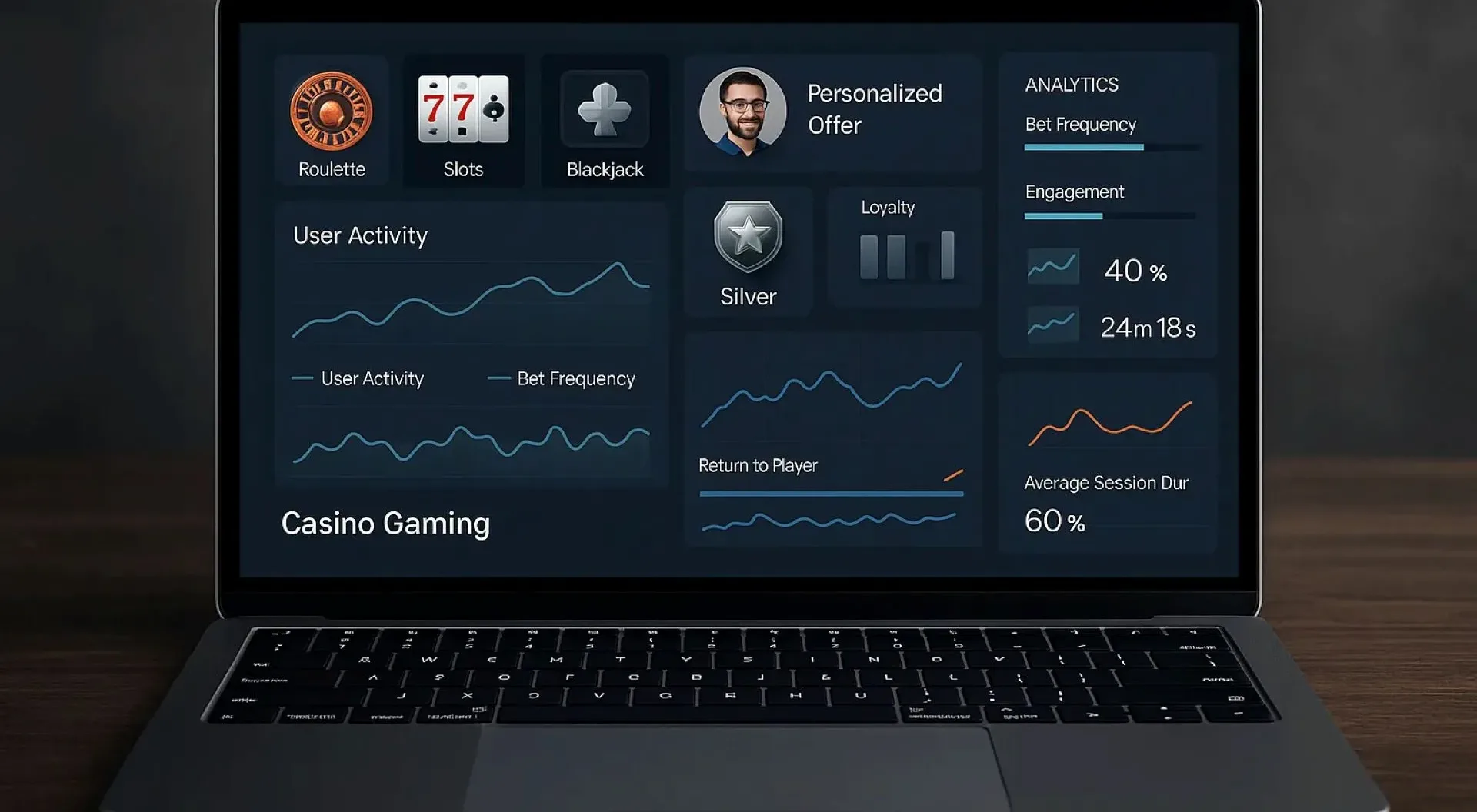

The casino industry, long associated with flash, luck, and chance, is undergoing a quiet but profound transformation. At the heart of this evolution lies data-driven casino game development, where the focus has shifted from flashy interfaces to intelligent, behaviour-based systems. This new approach is reshaping how digital casino games are built, marketed, and personalised through real-time analytics and player profiling.
2025 marks a turning point: real-money gaming is no longer just about luck or glitzy UI. It’s about knowing the player, understanding intent, and predicting behaviour with remarkable precision. Casino game developers are pivoting toward advanced analytics, segmentation strategies, and machine-learning models that now rival those used in e-commerce and fintech.
The Shift from Gut to Metrics
Historically, most decisions in the casino industry, from game placement to bonus timing, relied on a mix of experience and gut instinct. But as the digital gaming ecosystem matures, that approach is quickly being replaced by quantifiable, actionable insight.
Game developers and operators are now leveraging behavioural analytics platforms that track thousands of data points in real time. Metrics such as session duration, bet frequency, return-to-player (RTP) ratios, and device usage are no longer just reports; they are the basis for decisions about game design, difficulty progression, and even customer support prioritisation.
Personalisation as a Retention Engine
One of the most significant shifts in 2025 is the emergence of dynamic personalisation in casino games. Traditional loyalty programs based on static tiers or basic milestones are being replaced by systems that respond to player behaviour in real time.
For instance, a casual player who prefers slot games with low volatility will now see recommendations tailored to that play style. Meanwhile, a high-roller interacting primarily with blackjack tables on weekends may receive time-sensitive tournament invites or exclusive live dealer sessions curated to fit their rhythm.
This evolution stems from a deeper understanding of player psychographics—not just what they play, but why they play, how they react to wins and losses, and what motivates them to return.
The data driving this isn’t limited to in-game behaviour. Developers now collect and synthesize engagement data from support chats, withdrawal patterns, feedback forms, and even idle time between games to craft individual user experiences.
Building Analytics into the Game Stack
This level of integration reflects a maturing standard in data-driven casino game development, where every feature is built to measure, adapt, and respond in real time. Casino platforms in 2025 aren’t built with analytics as an afterthought. They’re constructed around it. Game developers are integrating tools like Mixpanel, Amplitude, and custom telemetry systems directly into their engines.
These analytics pipelines feed real-time dashboards that allow product managers to monitor performance KPIs as they unfold. Are players dropping off after a certain level? Are bonus offers underperforming in specific jurisdictions? These questions are now answered within hours not weeks of a game’s release.
The most advanced platforms are coupling this data with A/B testing frameworks that allow for live iteration. Game designers can tweak visual layouts, adjust bonus frequencies, or modify difficulty curves on the fly based on segmented player data. What was once guesswork is now backed by statistically significant insight.
What was once guesswork is now backed by statistically significant insight.
Loyalty 2.0 – The End of One-Size-Fits-All Rewards
Casino loyalty is no longer driven by flashy points programs or VIP-only chatrooms. The modern player expects more. They expect the platform to know who they are, what they like, and how to keep them engaged.
This demand is giving rise to what some industry analysts call “Loyalty 2.0,” a framework rooted in predictive engagement. Instead of rewarding only spend and frequency, platforms are now rewarding behaviours like social sharing, responsible gaming habits, in-game achievements, and even community participation.
Gamified reward systems have replaced flat bonuses. Instead of a static “5% cashback,” players unlock evolving reward tiers based on in-game missions, time spent learning new game types, or even providing valuable feedback.
These systems are powered by decision engines that monitor behavioural clusters in real time, generating incentives that feel earned, not handed out.
Privacy & Compliance in a Data-First World
Of course, with data abundance comes responsibility. The shift to behaviour-based personalisation raises questions around ethics, data storage, and compliance.
Platforms are now operating under increased scrutiny, especially in jurisdictions like the UK and EU, where the GDPR and new digital gaming acts demand clear consent mechanisms, transparency in data usage, and secure data warehousing.
Modern casino platforms must now implement robust data governance layers. This includes anonymisation of personally identifiable information, opt-in consent architecture, and region-specific data processing protocols. Game developers are partnering closely with compliance experts and legal advisors to ensure that their personalisation engines are not just effective, but ethical.
It’s no longer enough for a casino game to work; it has to be responsible by design.
Human Insight Still Matters
Even in this data-driven landscape, the role of human designers, analysts, and strategists has not been diminished, it has become more precise. Data may reveal patterns, but interpreting those patterns still requires domain expertise.
For example, a dip in average session time may reflect a technical issue, game fatigue, or even cultural misalignment with a new feature. Human insight turns raw metrics into meaningful action.
Moreover, creative teams are using player data to inspire new game concepts. If analytics reveal a growing trend in cooperative play, developers can prototype games that reward teamwork, challenge solving, or even social wagering.
Beyond Gambling – A Shift Toward Entertainment
The modern casino platform is becoming a hybrid of gaming, content, and community. Data enables not just faster reactions, but better storytelling.
Players are no longer just betting; they’re exploring story arcs, unlocking achievements, and participating in social leaderboards. Data is guiding this evolution. It tells developers which narratives resonate, which game mechanics drive retention, and how players progress through learning curves.
This shift also allows casino platforms to embrace responsible gaming with greater nuance. Data can flag problematic behaviour, such as erratic betting spikes or aggressive loss-chasing, and trigger real-time interventions. These can range from cool-down timers to personalised messages encouraging breaks.
What’s Next for the Industry?
The next frontier is hyper-personalised casino ecosystems—platforms where every element of the user interface, every promotional banner, every live dealer invite, and every notification is generated based on a player’s profile.
Some of this is already happening quietly in beta-mode environments. Developers are exploring reinforcement learning models that adapt gameplay mechanics in real-time, dynamically balancing risk and reward based on the player’s current cognitive and emotional state.
And it won’t stop at games. Onboarding flows, tutorial delivery, and even withdrawal limits may eventually be guided by adaptive systems that learn from user history, risk behaviour, and intent.
For those planning to enter the market, this new model also underscores the importance of white label casino platforms, which allow operators to launch data-enabled casino environments faster, while still maintaining backend control and compliance.
For anyone considering a step into the world of digital casinos, understanding these data-driven mechanics isn’t optional—it’s foundational. A strong entry point begins with research, planning, and understanding how analytics underpin retention and revenue .A full breakdown of licensing, platform setup, and analytics integration is outlined in this detailed guide to launching an online casino.
Final Thought
As the global casino gaming industry becomes increasingly saturated, data is the new house edge. Platforms that fail to build around it ethically and intelligently risk falling behind. Those who master it will define not just the future of gaming, but the future of digital entertainment as a whole.
In a world where everyone can build a casino game, the difference lies in knowing the player. And in 2025, that knowledge doesn’t come from guesswork. It comes from data.
The post Data-driven casino games – Analytics, personalisation & the new loyalty appeared first on London Daily News.