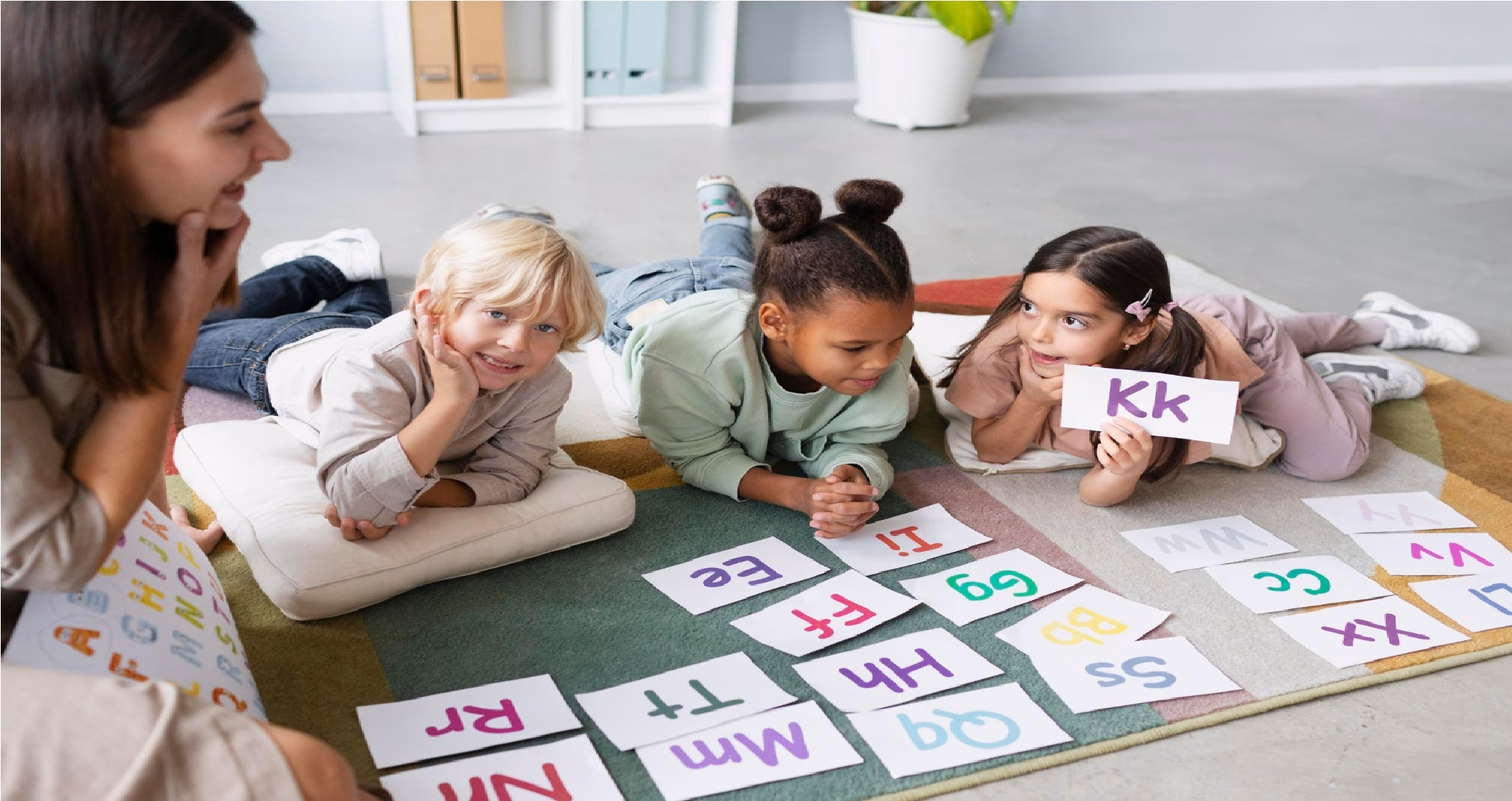

The period of time from birth to entering kindergarten is crucial for children’s lives. It’s when a child learns how to communicate with other people. They start exploring our world and absorb new information. Early childhood education allows us to learn basic social and emotional skills. It creates the foundation for the successful adaptation to school times.
English in early childhood education is a key element of preparation for adult life. Some studies have proved that young bilinguals are better at social understanding. For example, they have better sensitivity to tone of voice compared to other children. English-speaking people have more opportunities when it comes to travelling, education, and building a career.
In this article, we will tell you about the pros of learning English in early childhood and give you some methods of teaching.
Cognitive and developmental benefits
Learning a new language supports memory. Studies show that learning new languages increases grey matter density and boosts cognitive reserve. As a result, a child will memorise more information. Learning English improves the concentration of attention, which is good for subsequent education in colleges and universities.
Using two or more languages is good for brain development. Another crucial skill is problem-solving and rational thinking. They help to overcome challenges and make the right decisions.
Social and emotional impact
Learning English as an additional language in the early years improves confidence. It will help to build social connections effortlessly. As a person speaks English more fluently, they feel more comfortable in social interactions. It’s good for socialisation in general. A child learns how to interact with teachers and classmates. Over time, they make friends, participate in social activities like group games and competitions.
An English-speaking child isn’t afraid of saying their opinion. They find proof and arguments for any discussions. They actively listen to others, which helps them form well-rounded perspectives. They ask questions to clarify information and enjoy engaging in thoughtful conversations.
Methods of language acquisition
There are some methods of language acquisition in elementary schools in Russia. They differ from adult teaching methodology. Attention span in early childhood is short. A 4-year-old child can focus their attention for 8-12 minutes only. It increases with age.
The methods of teaching should be adjusted according to children’s age and cognitive abilities. There are crucial points:
- Play-based and story-based learning. Playing games is effective for young learners. It encourages them to learn new words and useful expressions in a natural context.
- Songs and movies. Singing English songs boosts pronunciation and improves mood. It helps to express emotions and to reduce anxiety. Watching movies and cartoons is good for listening skills. This way, children will learn new words and grammar rules.
- The full immersion. Children will use English in their daily routine. It’s important not to use other languages during the lesson. If a child doesn’t understand what a teacher says, they try to choose synonyms and similar expressions.
- Repetition. The work on mistakes and repetition of grammar rules and vocabulary is the best way to remember new information.
- Visual support techniques. Early years English as an additional language implies visual support during lessons since a child doesn’t have a large vocabulary. Painting and visual presentation help. Books and guides have numerous illustrations.
- Scaffolding. Teachers give a child step-by-step support when working on a difficult task. This way they learn how to make decisions, and at the same time they can count on help when necessary. Scaffolding implies creating a comfortable environment and active engagement of children.
- Multimodal learning. It includes video, audio, reading, listening, and kinesthetic methods. Teachers give a lot of practical examples when explaining theory. A child will see numerous items from their daily routine. It creates firm associations between physical things and the language.
Understanding and empathetic tutors create a safe space for English learning. It’s important for a child to feel comfortable during lessons. Sometimes teachers don’t give grades or scores since they can be demotivating. Tutors point out mistakes in a delicate way, without any judgment. They praise a child for successes. This way, even introverted learners will have enough motivation for new lessons.
Another thing is parent engagement. Empathy and a comfortable space are important in a family. Parents should motivate their child to show interest in their everyday activities. Ask your child what they learn today and what challenges they faced. Don’t scold them for mistakes and bad scores. At an early age, it’s necessary to control the education process. Help your child with homework. Make sure they get along well with tutors and classmates. Over time, you can give a child more autonomy.
Global and local approaches
Modern private schools use the methods we listed to help children speak English fluently. For example, the British International School provides Russian and International educational programs. Foundation programs for children from 2 to 5 years old develop the basic social, intellectual, and physical skills. There are several key stages for studying mathematics, sciences, history, and languages. Local programs include preschool education from 4 years old, primary, secondary, and general steps.
This way, your child will be ready to enter the best American and European universities. The British International School is about world-class education and access to global academic and life opportunities. There are 5 key facts about this school:
- International programs and methods recognised in 160+ countries.
- Accredited by COBIS and CIS (education matches high global standards).
- More than 50 nationalities (your child will end up in a multicultural, inclusive environment).
- Native-English-speaking tutors will give children the right pronunciation and a lot of speaking practice.
- Small groups of learners for personalised attention and support.
Thus, early English education is a good way to boost confidence and social skills. Learning English in early childhood improves cognitive abilities like memory and attention span. Your children will find new friends and like-minded classmates. Multilingual development has a lifelong effect. Fluent English is important for building a career and a successful education. It will help to travel and to meet new people without language barriers.