

The online poker evolution is unfolding in plain sight. A decade ago, the game’s digital landscape was ruled by centralised platforms, slow payments, and opaque processes. But today, new technologies are not just changing the way players interact with poker; they’re redefining the rules that govern trust, access, and fairness.
At the heart of this transformation are three major shifts: the rise of secure crypto wallets, the normalisation of instant withdrawals, and the implementation of smart contracts. These aren’t marketing buzzwords. They’re concrete developments reshaping the architecture of online poker from the backend outward and, more importantly, giving players back the control they’ve long been denied.
Legacy Platforms and the Limits of Centralized Poker
Before the current online poker evolution, most poker sites operated on fully centralised models. Users deposited funds directly into company-owned wallets. Those funds were often pooled, held, or processed through multiple layers of approval and compliance. The process worked for a time. But it left players exposed to delays, trust issues, and little visibility into how their money moved.
The pain points were predictable. Withdrawals could take days or weeks. Platform downtime could freeze assets temporarily. And most critically, players could not audit how prize pools were managed or how rake percentages were applied. Trust in the system was often blind and fragile.
This outdated infrastructure now finds itself up against a new wave of innovation driven by decentralisation, transparency, and automation.
Secure Wallets: Redefining Ownership in Online Poker
In this next phase of the online poker evolution, the first pillar is ownership. Secure crypto wallets are giving players direct control over their funds, often for the first time in the game’s digital history.
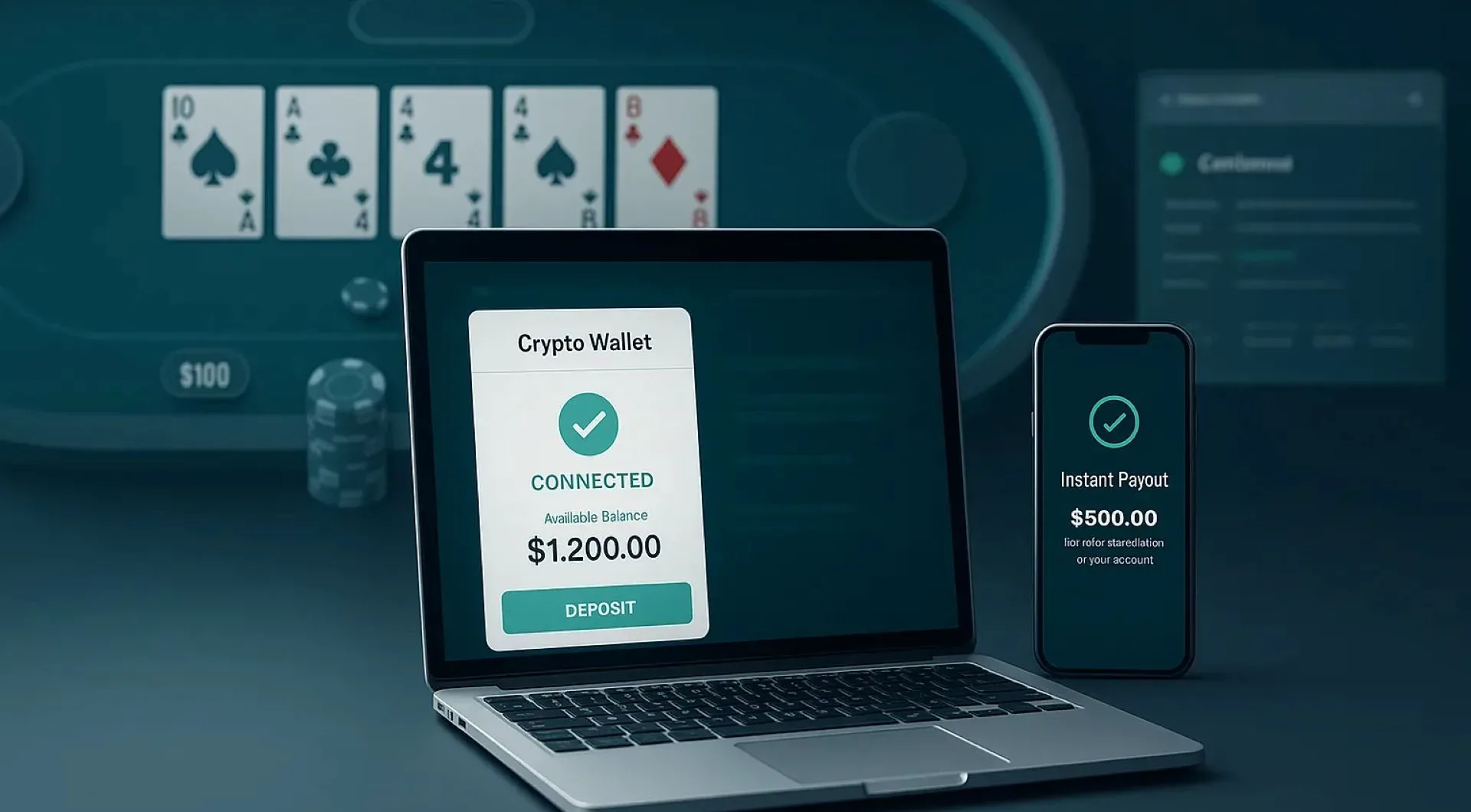
Instead of moving money into a platform’s system, players connect non-custodial wallets to digital accounts where only they hold the keys. These wallets, supported by blockchain protocols like Ethereum, Polygon, and Solana, offer users true ownership, privacy, and visibility.
Security measures have evolved as well. Multi-factor authentication, device-level biometrics, and cold wallet options are becoming commonplace. Players no longer have to rely on a platform to safeguard their winnings. The funds remain within their control, and the interface acts more like a bridge than a bank.
This change in architecture also introduces transparency in transactions. When funds are used for buy-ins or received as prizes, those movements are recorded immutably on the blockchain. That means players can confirm, trace, and verify every financial interaction tied to their game.
Instant Withdrawals: From Frustration to Fulfilment
One of the most tangible benefits in this online poker evolution is speed. Withdrawals, a process once plagued by delays and friction have now become a near-instant action.
Using blockchain rails, modern poker platforms can release funds within seconds. Smart contracts validate tournament outcomes and push winnings directly into the player’s wallet without requiring human approval or batch processing.
This real-time functionality is especially effective when combined with stable coins like USDT and USDC. These digital tokens are pegged to fiat currencies, offering the stability of dollars with the speed of crypto. Players get their money faster, and they’re protected from the price swings typically associated with crypto holdings.
The shift isn’t just technical. It’s cultural. Fast payouts have become the new norm, not a competitive bonus. In fact, platforms that continue to delay withdrawals are beginning to lose user trust and traffic.
Smart Contracts: Trust Isn’t Told, It’s Coded
While wallets and payments improve the financial layer, smart contracts reshape the logic layer. These self-executing programs are the backbone of the online poker evolution, enabling fully transparent gameplay, fair results, and trustless enforcement of rules.
A smart contract, once written and deployed, can manage tournament entries, escrow funds, enforce timeout penalties, and distribute prizes based on predefined conditions. No manual input is required once the code goes live and no administrator can change it on the fly.
The result is a playing environment where rules are consistent, enforceable, and visible. Platforms using smart contracts often open-source their logic, allowing anyone to audit how prize splits are calculated or how rake is applied. That level of clarity was simply never available in traditional systems.
Smart contracts also support complex features like anti-collusion systems, automated identity matching, and game-theory enforcement algorithms. These tools help ensure that outcomes remain rooted in fairness, not manipulation. Developers and researchers interested in the backend mechanics of decentralised poker systems can refer to online poker development resources that outline typical frameworks, transaction flows, and contract logic used in emerging blockchain-based platforms.
Risks in the Code and Beyond
Of course, no evolution comes without risk. Blockchain poker introduces a new set of challenges that both developers and players must consider carefully.
Wallet security remains a concern. If users fail to secure their private keys, they can lose access to their funds permanently, with no recovery mechanisms in place. The promise of control also comes with the responsibility of self-custody.
Smart contracts, while designed to be immutable, are still vulnerable to bugs. A single overlooked flaw can result in fund loss or game-breaking errors. Audit firms now play a critical role in the ecosystem, vetting contracts before they are deployed.
Then there’s the issue of gas fees. On chains like Ethereum, transaction costs can spike during periods of high activity, making gameplay expensive or delaying confirmations. This is pushing developers toward Layer 2 networks and sidechains that offer cheaper, faster alternatives, but those systems bring their trade-offs in terms of decentralisation and adoption.
A Glimpse Ahead: Decentralised Poker Rooms and Interoperability
The next chapter in the online poker evolution is unfolding on decentralised platforms poker rooms that run entirely on-chain with minimal platform control. These systems allow players to stake across chains, join games from different wallets, and participate in governance through tokens.
Such platforms are beginning to use NFTs to represent player identities, allowing for anonymous yet verifiable reputations. Others are developing multi-wallet staking systems, where players can pool funds or form teams transparently.
Cross-chain interoperability is also becoming a priority. Instead of being locked into one ecosystem, players are gaining the ability to move seamlessly between networks, choosing tables and tournaments based on performance, prize pools, or community rules.
This decentralised vision may not replace all centralised platforms, but it introduces a credible alternative for players who prioritise transparency and self-governance.
Legal Uncertainty and Regulatory Caution
Despite the progress, legal clarity remains limited. The intersection of gaming, blockchain, and finance creates a complex regulatory puzzle and not all jurisdictions are moving at the same pace.
Some countries, like Malta and Curacao, are beginning to issue licenses for blockchain-based gaming. Others, particularly in the EU and North America, are still debating whether smart contract poker platforms fall under gambling laws, financial regulations, or both.
A major concern is responsibility. If something goes wrong a bug, a payout failure, a manipulation attempt who is accountable? The developer? The DAO? The platform hosting the front-end?
Until regulators provide clearer guidance, many platforms will continue operating in a grey area, guided more by community standards than by formal oversight.
Where the Game Is Headed
The online poker evolution isn’t coming it’s already here. What’s shifting now is not just how players interact with poker, but what they expect from it. They want ownership. They want speed. And they want proof that the rules apply equally to everyone.
Secure wallets give them that ownership. Instant withdrawals satisfy the need for fast, frictionless access to winnings. Smart contracts ensure the game is played fairly and visibly.
The platforms leading this change aren’t promising revolution. They’re building it, line by line, on open-source code and distributed infrastructure. And for players around the world, that’s a bet worth placing.