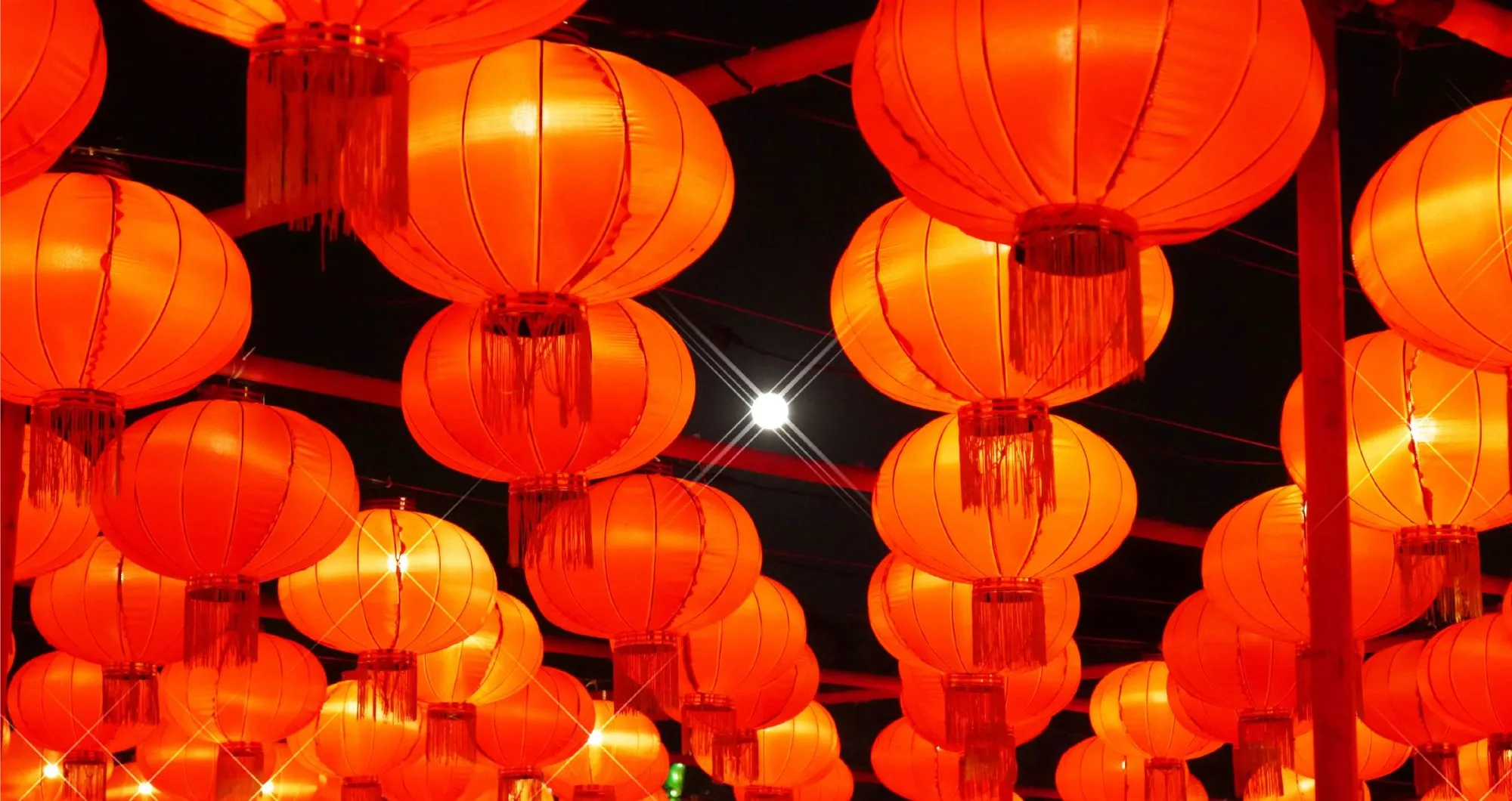

The Lantern Festival, a traditional Chinese festival with a history spanning over two millennia, arrives on the 15th day of the first lunar month. As the grand finale of the Spring Festival, it not only carries people’s auspicious hopes for the new year but also captivates global attention through its unique cultural charm.
The origin of the Lantern Festival
The origins of the Lantern Festival can be traced back to the Han Dynasty. During this period, the 15th day of the first lunar month was designated as a significant day for worshiping the “Taiyi God”, with nighttime lantern lighting becoming a fixed ritual. By the Tang Dynasty, the Lantern Festival evolved into a grand national celebration. The lantern fairs in Chang’an City reached an unprecedented scale, as poet Lu Zhaolin’s verse “lanterns connecting to the Milky Way like falling stars, hovering near towers like suspended moons” vividly depicts the magnificent spectacle of brilliant lights during that era.
The custom of the Lantern Festival
1. Admiring lantern displays
Admiring lantern displays undoubtedly stands as the most iconic tradition of the Lantern Festival. From simple palace lanterns of the Han Dynasty and intricate revolving horse lanterns of the Song Dynasty to modern technology-integrated light shows, the art of lantern craftsmanship has evolved continuously. Annual lantern fairs in locations like Nanjing’s Confucius Temple and Zigong, Sichuan, attract tens of thousands of visitors. These lanterns of diverse designs not only illuminate the night sky but also symbolise people’s aspirations for a brighter future.
The Zigong International Dinosaur Lantern Festival has gained global acclaim, hailed as the “World’s Finest Lanterns.” As a local Zigong-based company, FOREST PAINTING LANTERN Factory has specialised in the lantern industry for over a decade, offering integrated services in design, production, and logistics. Explore more Lantern Festival displays by clicking here. https://www.paintinglantern.com/china-international-dinosaur-light-fair/
2. Eat dumplings
Consuming yuanxiao (sweet glutinous rice balls) stands as another essential tradition. In northern China, they are called yuanxiao, crafted through a rolling technique, while southern regions refer to them as tangyuan, shaped by wrapping. Both versions, with their perfect roundness, symbolise family unity and completeness. As families gather to savor the sweet, soft delicacy, the bonds of kinship deepen in the warmth of steaming bowls.
3. Guess the Lantern riddle
The lantern riddle activity, a pastime that bridges refined and popular tastes, adds distinctive cultural depth to the Lantern Festival. During the Song Dynasty, literati inscribed riddles on lanterns for public guessing games. For instance, the riddle “the full moon on the 15th day” (answer: the idiom 正大光明, meaning “integrity and transparency”) combines intellectual challenge with delightful wordplay. This tradition not only preserves the ingenuity of Chinese characters but also embodies ancient wisdom in blending education with entertainment.
4. Ancient Valentine’s Day
Notably, the Lantern Festival also served as a “Chinese Valentine’s Day” in ancient times. In feudal society, when women’s outings were restricted, the lantern-lit night offered rare opportunities for social gatherings. The romantic scene is immortalised in poet Ouyang Xiu’s verse: “Beneath the willow where the moon climbs high, lovers meet as twilight paints the sky.” Countless tender love stories unfolded amidst the fading lantern lights, weaving romance into the festival’s golden history.
The cultural meaning of the Lantern Festival
Today, the Lantern Festival has been inscribed on China’s National Intangible Cultural Heritage List. From the “Shangyuan Night” illuminations at Beijing’s Forbidden City to Pingxi’s sky lantern rituals in Taiwan and overseas Chinese community celebrations, this ancient tradition now engages the world with fresh vitality. It stands not only as a cultural treasure of the Chinese nation but also as a bridge connecting past and present, China and the world.
Amidst the festival’s radiant glow, we witness more than dazzling lanterns and jubilant crowds—we behold the enduring vitality of cultural continuity. The Lantern Festival, through its timeless charm, reminds us: tradition is not a frozen relic of the past, but a living current shaping the present and illuminating a hopeful future.