

If you’ve been following the gambling scene in the UK lately, you’ve probably noticed things are changing fast. The government and regulators aren’t messing around anymore when it comes to player protection. Let me walk you through what’s actually happening right now and what it means for you.
The Big Picture: A Complete System Overhaul
Here’s the thing – the UK has basically torn up the old playbook on gambling regulation. We’re not talking about tiny tweaks here. The 2025 reforms represent a decisive shift in UK gambling regulation and with the introduction of a statutory levy, targeted stake limits, and enhanced consumer protections, the UK is positioning itself as a global leader in responsible gambling regulation.
Otto Bergstrom, a Roulette and Gambling expert from roulette UK says: The Gambling Commission has moved away from that old “let the industry police itself” approach and gone full intervention mode. And honestly? It was probably about time.
Your Money is Being Watched (But Not How You Think)
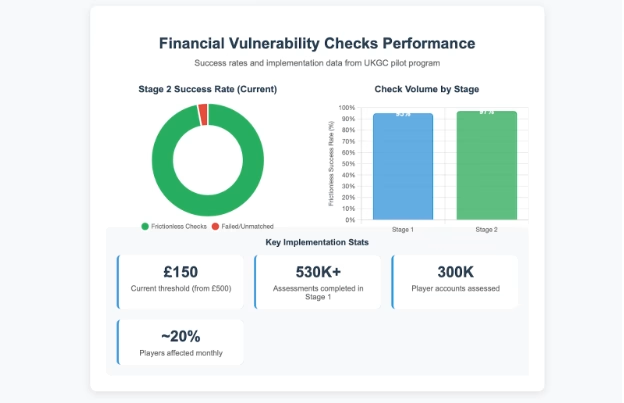
The most talked-about change is probably the financial vulnerability checks. Don’t panic – this isn’t Big Brother monitoring your bank account. From 28 February 2025, the relevant threshold is where the customer’s deposits minus withdrawals exceeds £150 in a rolling 30-day period.
What actually happens is pretty straightforward. If you lose more than £150 net with a gambling site in a month, they’ll run a quick check using publicly available data to see if you’re in serious financial trouble – think bankruptcy orders, court judgments, that sort of thing. These checks would be conducted when a customer’s net loss is more than… (‘Net loss’ is the loss of deposited money with a particular operator, in the defined timeframe.)
The clever bit? During stage one of the pilot, around 95% of financial vulnerability assessments were completed what the UKGC described as frictionlessly, which then rose to 97% in stage two. Most people won’t even notice it happening. You can keep playing while they run the check, and if you’re fine (which you probably are), nothing changes.
The Industry is Paying Up
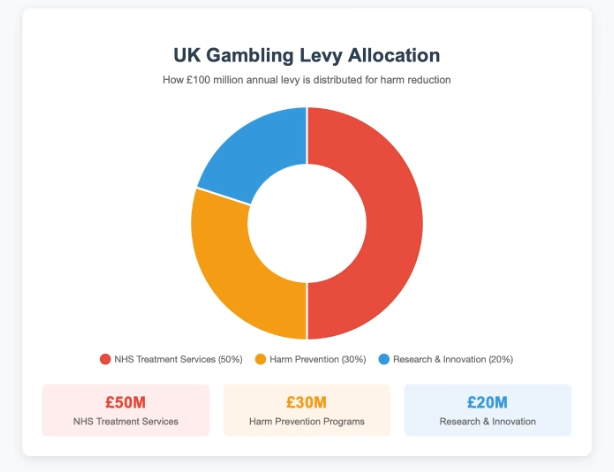
One of the biggest changes is financial. On 6 April 2025, the Gambling Levy Regulations 2025 came into force in the UK, introducing a “statutory gambling levy” (being a percentage of Gross Gambling Yields) that will be payable by gambling operators to the UK Gambling Commission from 1 October 2025.
This isn’t pocket change either. The mandated levy would “generate £100 million”, 50% of which will be directed to NHS England and appropriate bodies in Scotland and Wales. Another 30% will be directed towards investment in the prevention of gambling harms while the remaining 20% will be directed to UK Research and Innovation (UKRI) and the Gambling Commission to develop bespoke research programmes on gambling.
What this means for you is simple: there’s going to be a lot more money going into treatment services, research, and prevention programs. No more relying on voluntary donations that operators could cut whenever they felt like it.
Slot Games Got a Reality Check
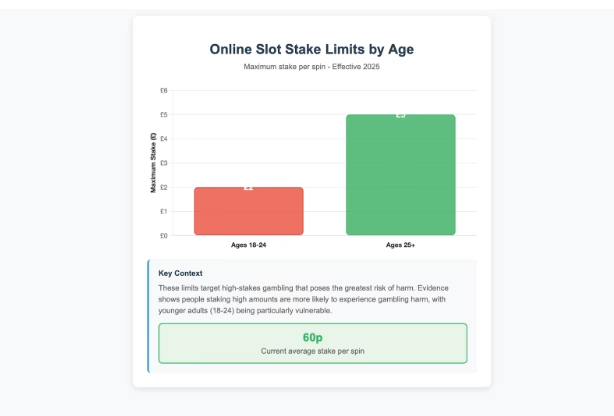
If you’re into online slots, you’ve definitely felt this one. From 9 April 2025: a £5 per spin limit applies to players aged 25 and over; and From 21 May 2025: a £2 per spin limit applies to players aged 18 to 24.
Before you get annoyed, consider this: The evidence shows that people staking high amounts are more likely to experience gambling harm. The £5 stake limit is a targeted intervention to protect those most at risk. Plus, I note that the average stake on online slots is 60p. So for most people, this shouldn’t change much.
They’ve also banned all those features that make slots feel like a pinball machine – no more autoplay, turbo spins, or slam stops. Notably, features such as autoplay, turbo spins, quick spin, and slam stop are now prohibited, encouraging players to maintain control over their gambling activity.
Technology is Getting Smarter (And More Helpful)
The really interesting stuff is happening behind the scenes. Blockchain provides a transparent, immutable record of transactions and betting activity, allowing operators to demonstrate compliance with regulatory requirements and ensuring trust in the integrity of gaming platforms.
But the part that actually matters to you? Beyond these technological innovations, operators are experimenting with gamified self-control tools. For instance, dashboards that visually display spending trends or time spent on games can make players more conscious of their behaviour.
The Tools You Actually Have Access To
Let’s talk about what’s available to you right now. Modern responsible gaming tools are now a standard component of most UKGC-licensed online casinos, designed to help players maintain control over their gambling habits while still enjoying the experience.
The basics include deposit limits, loss limits, and time-outs. One of the primary tools is deposit and loss limits, which allow players to set daily, weekly, or monthly caps on how much they can wager. You can also set reality checks that remind you how long you’ve been playing.
If you need a break, Time-outs allow players to take short breaks from gambling, while self-exclusion lets them suspend access to an account for weeks, months, or longer.
What’s Coming Next
The financial risk assessment pilot is still running, and it’s looking promising. The Commission maintains its timetable to complete the pilot by April 2025, viewing financial risk assessments as the most targeted method for identifying potentially financially vulnerable customers.
These enhanced checks would be much more sophisticated than the basic vulnerability checks, using credit reference data to identify people who might be gambling money they can’t afford to lose. Enhanced Checks would be primarily based on credit reference data rather than data from public sources, meaning Enhanced Checks would be highly dependent on data sharing channels existing between operators and credit reference agencies.
The Bottom Line
Look, nobody likes being told what they can and can’t do with their money. But the UK gambling market was getting pretty wild, and some people were getting seriously hurt.
“We have to get the balance right between protecting people from the potentially life-ruining effects of gambling-related harm and respecting the freedom of adults to engage in an activity that the vast majority do so without experiencing harm.”
The regulators seem to have learned from past mistakes. Instead of blanket restrictions that annoy everyone, they’re trying to be surgical about it – targeting the specific situations where harm is most likely to occur while leaving most people alone.
By anchoring its reforms in financial vulnerability rather than broad affordability, the Commission is signalling a more balanced and targeted approach, making financial vulnerability checks no longer “an afterthought”.
What This Means for You
If you’re gambling within your means and not showing signs of serious financial problems, most of these changes won’t affect your day-to-day experience much. You might notice slightly different game interfaces, some new dashboard features, and maybe the occasional reality check popup.
If you are struggling with gambling, there’s going to be a lot more help available. Claire Murdoch, NHS National Director for Mental Health, said: “I am delighted to welcome this commitment to a mandatory gambling levy which the NHS, bereaved families and the voluntary sector have been calling for so we can treat this growing problem”
The key thing to remember is that all of this is happening whether you like it or not. The UK has decided it’s serious about becoming the global leader in responsible gambling regulation. The question isn’t whether these changes are coming – they’re already here. The question is whether you’re prepared for them.
And if you ever need help, remember that the National Gambling Helpline… Free of charge, 24 hours a day, 7 days a week. is always available.