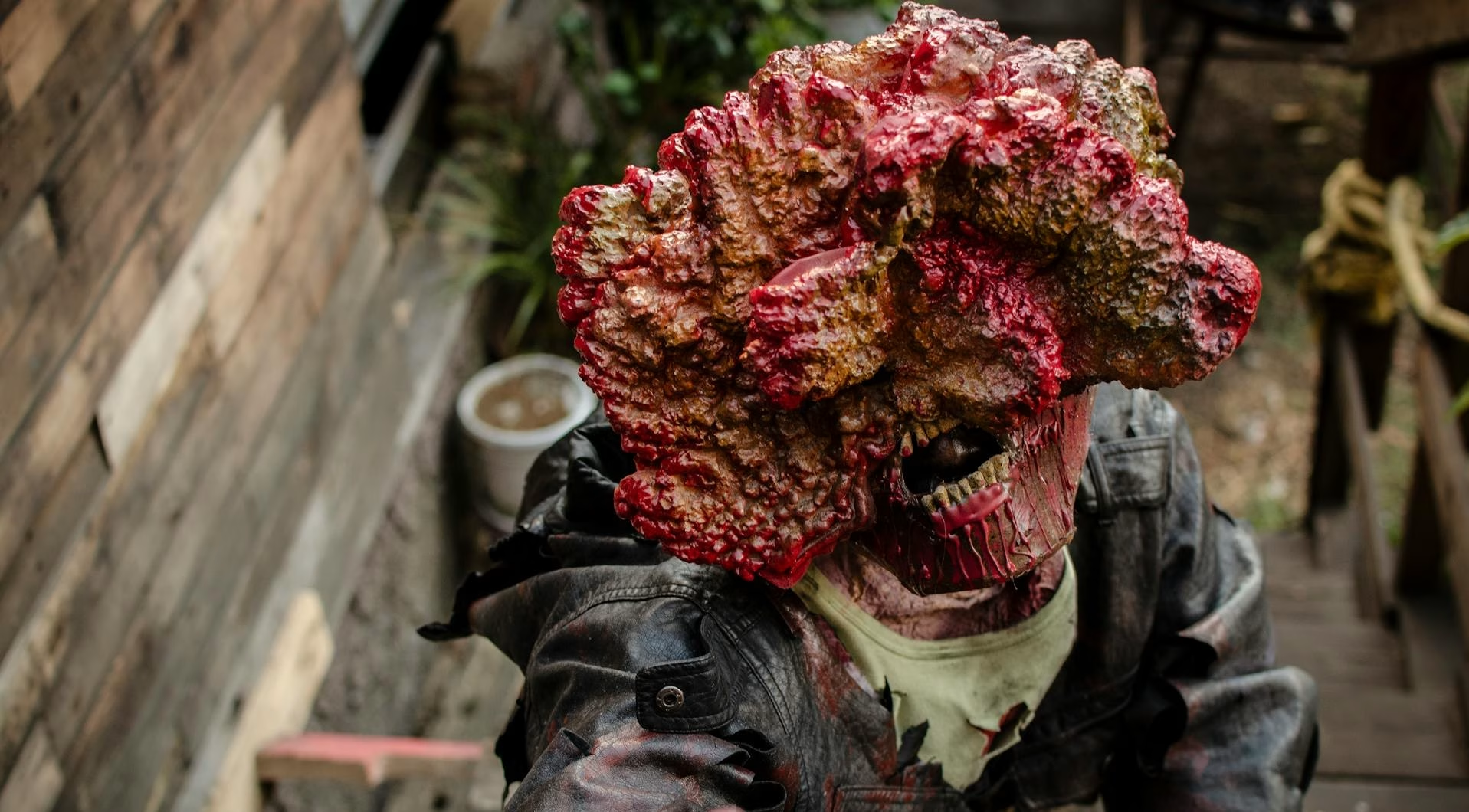

When The Last of Us dropped its first trailer, it wasn’t the graphics or the post-apocalyptic setting that left jaws on the floor—it was the monsters. Not your typical zombies, but eerie, fungus-infected humans with distorted faces and clicky echolocation. It felt original, terrifying… and surprisingly plausible. That’s because The Last of Us didn’t pull its nightmare from fiction—it borrowed it from nature.
Welcome to the world of cordyceps: the real-life brain-hijacking fungi that inspired one of gaming’s most iconic infections.
The Zombie Ant Fungi: Nature’s Horror Story
Cordyceps is a genus of parasitic fungi with around 600 species, but one particular type—Ophiocordyceps unilateralis—is the stuff of nightmares. It targets ants, infiltrating their bodies and minds, forcing them to climb vegetation, clamp onto leaves, and die. Then, a fungal stalk erupts from their head and releases spores, repeating the cycle.
Sounds familiar? It should. This horrifying process served as the creative launchpad for Naughty Dog’s vision of a world overrun by a mutated strain infecting humans. While cordyceps can’t currently make the jump to mammals, the fact that a fungus can control its host’s behaviour is scientifically accurate—and totally terrifying.
Could It Actually Happen?
Here’s where things get uncomfortably interesting. While there’s no known cordyceps species that infects humans, climate change and microbial evolution make for unpredictable possibilities. Warmer global temperatures could push fungi to adapt to survive in warmer-blooded hosts, as explained by real mycologists in articles that popped up alongside The Last of Us‘ rising popularity.
And while the idea of a full-scale, mushroom-zombie apocalypse is still fiction, fungal infections are rising worldwide. They’re becoming harder to treat due to resistance to antifungal medications—something scientists are actively researching. So, while a Cordyceps outbreak isn’t around the corner, The Last of Us has definitely tapped into something uncomfortably close to reality.
If that’s enough to make you want to double-check your bunker supplies, you’re not alone. Luckily, grabbing essentials for your next gaming session—or fungal outbreak simulation—is easier than ever. With a Visa gift card online, you can grab your favourite digital games, gear, and survival-themed titles without needing to step out into the spore clouds.
More Than a Monster: Cordyceps as a Story Device
In The Last of Us, the cordyceps infection is more than a monster-making mechanic. It’s a metaphor—about control, loss of agency, and the fragility of civilization. Unlike virus-based apocalypses (28 Days Later, Resident Evil), cordyceps doesn’t just kill—it rewires, manipulates, and makes its host complicit in the spread.
That deeper symbolism is what makes the game stand out. The infected aren’t faceless ghouls—they were once people, now overtaken by something they never saw coming. It’s chilling because it toes the line between sci-fi and science fact.
And the further the game explores this theme—through level design, character encounters, and even soundscapes—the more the real-world basis adds tension. Every clicker you hear isn’t just a game mechanic; it’s a nod to something out there in the underbrush, waiting to evolve.
Fungal Fears and Gaming Realism
Cordyceps in The Last of Us proves that science doesn’t have to be exaggerated to be terrifying. Sometimes, you just need a microscope instead of a monster manual. And with players becoming more interested in science-based horror, expect more developers to turn to biology for inspiration.
So the next time you boot up a game where a fungal apocalypse looms, know that it’s rooted in something disturbingly real. And if you’re itching to dive back into Joel and Ellie’s infected world—or explore other titles with science-driven storytelling—consider Eneba, a digital marketplace that makes accessing your favourite games and gift cards a breeze.
Feature image by Gustavo Martínez on Pexels